Mobile Gaming Titans: The Enduring Dominance of Clash of Clans and Candy Crush Saga
In the fast-paced, ever-evolving world of mobile entertainment, where trends can be as fleeting as a TikTok video, two names have demonstrated a level of staying power that is nothing short of phenomenal. You probably wouldn't think it, but mobile games Clash of Clans and Candy Crush Saga are still raking in millions, defying the typical lifecycle of digital products and proving that with the right formula, a mobile game can become a perennial cash cow. As of 2026, these titans continue to be the benchmark for success in an industry now worth over $150 billion globally.
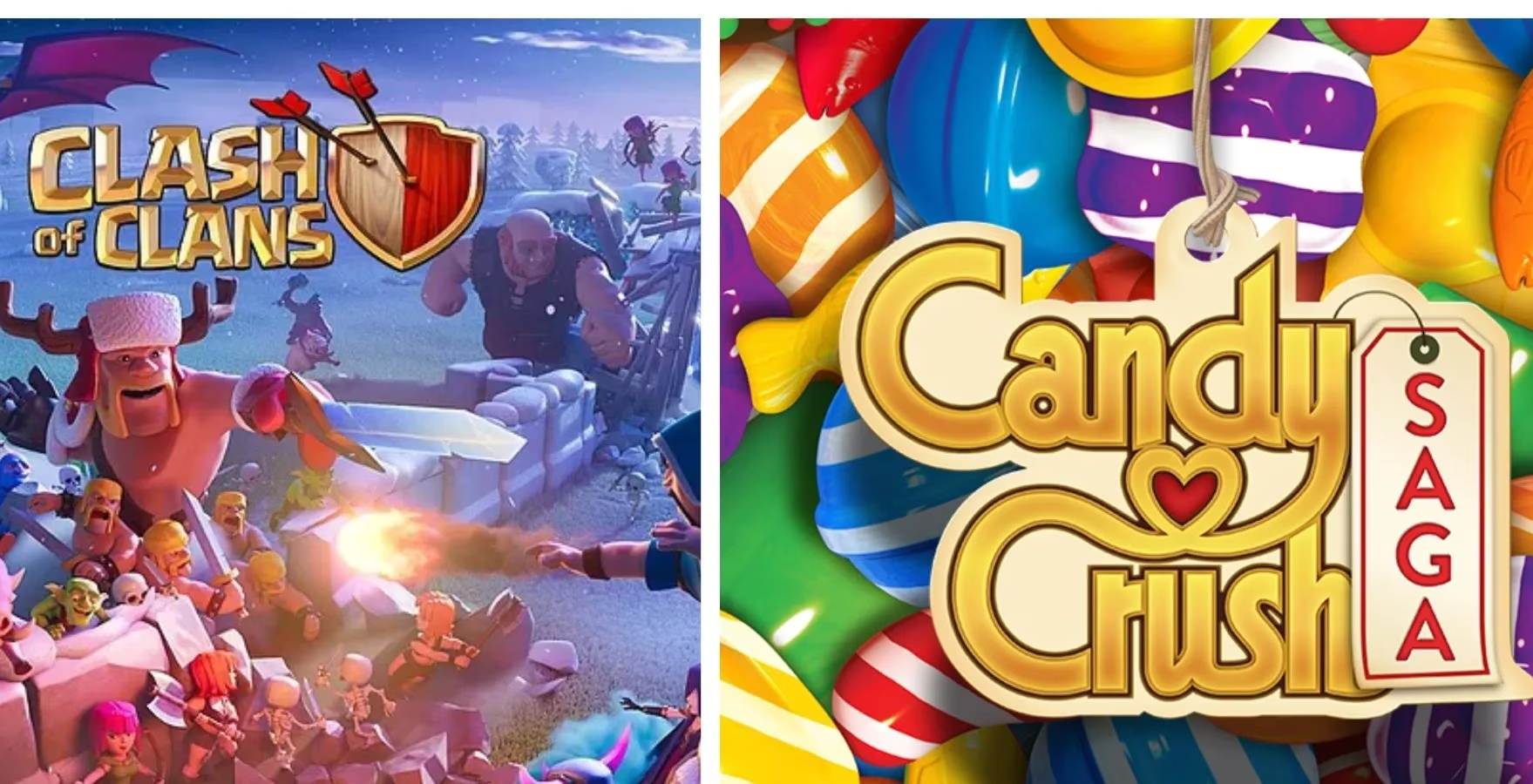
The Unshakeable Pillars of Profit
Let's break down the numbers that make this duo the undisputed champions. Clash of Clans, that strategic fortress-builder from Supercell, has been around for well over a decade. Candy Crush Saga, the match-three puzzle phenomenon from King, was released just a few months prior, in April 2012. The fact that both are still immensely popular and continue to generate staggering cash for their respective studios is a testament to masterful live-service operations and community engagement. The mobile gaming industry has picked up a rapid pace in recent years, and these games have been riding that wave from the very beginning.
A Snapshot of Their Financial Dominance (2025 Data):
| Game | Estimated Daily Revenue (2025) | Estimated Annual Revenue (2025) | Lifetime Downloads (Est.) |
|---|---|---|---|
| Clash of Clans | ~$1.8 Million | ~$657 Million | 500+ Million |
| Candy Crush Saga | ~$1.5 Million | ~$548 Million | 3+ Billion |
| Roblox Mobile | ~$1.2 Million | ~$438 Million | 1+ Billion |
Note: Roblox Mobile remains a strong contender, but the legacy of the top two is unmatched.
The data speaks for itself. While their peak daily revenues from years past (like Clash of Clans's whopping $2.2 million daily in 2019) may have normalized, they have settled into a remarkably stable and highly profitable groove. Candy Crush, having been downloaded over 3 billion times worldwide, has an install base that is the envy of the entire app economy. It's the definition of a 'killer app'.
The Engine of the Mobile Economy
These games aren't just successful in a vacuum; they are primary engines driving the entire mobile ecosystem. Recent data consistently shows that games are the most popular category for downloaded apps. This trend has only solidified since the late 2010s. As a direct result, app stores continue to reap huge profits. The model is simple but incredibly effective:
- Player Engagement → In-App Purchases → Platform Fees (30%) → Massive Store Revenue
While the specific split between Google Play and the Apple App Store has fluctuated, the underlying truth remains: flagship games like Clash and Candy Crush are responsible for a disproportionate share of this wealth. They are the 'tentpole' products that drive user engagement with the platforms themselves.
The Secret Sauce: Why They're Still on Top
So, what's their secret? How do they avoid fading into obscurity? It's a combination of factors that other developers try to replicate but rarely achieve with such consistency.
-
Constant Evolution & Live Ops: Both games are masters of the 'live service' model. They are not static products shipped and forgotten. Teams consistently roll out:
-
🏰 New troops, defenses, and Town Hall levels for Clash of Clans.
-
🍬 New levels, special events, and candy combinations for Candy Crush Saga.
-
Limited-time events and seasonal themes that give players a reason to log in every single day.
-
-
Accessible Yet Deep Gameplay: Candy Crush is famously easy to learn but can be devilishly hard to master, creating a 'just one more level' addiction. Clash of Clans offers simple base-building mechanics layered with incredibly deep clan-based social strategy and competition. This 'easy to learn, hard to master' philosophy is gaming gold.
-
Strong Social & Community Fabric: Clash of Clans is built around clans. This fosters a powerful sense of community, rivalry, and teamwork. Candy Crush leverages social leaderboards and lives shared among friends. This social glue prevents players from simply dropping the game.
-
Smart Monetization: Their monetization is rarely intrusive or 'pay-to-win' in a way that drives free players away. Instead, it's often framed as a way to speed up progress or access special cosmetic items. Players don't feel forced to pay, but the options are enticing enough that millions do so willingly.
The Broader Landscape and Lasting Legacy
As we look at the mobile landscape in 2026, filled with hyper-casual hits, ambitious AAA ports, and blockchain experiments, the sustained success of these two games is a powerful lesson. It shows that building a beloved, ever-evolving world can be far more valuable than chasing the next viral trend. They have achieved a rare status: they are both products and persistent digital places where millions spend a part of their daily lives.
Their financial performance continues to fund their studios' future endeavors and sets a high bar for profitability. For any new developer entering the arena, the question isn't just "how do we get a hit?" but "how do we build something with the longevity of Clash of Clans or Candy Crush Saga?" These games have moved beyond being mere apps; they are institutions in the mobile world, proving that in the digital age, with the right care and content, a game's success story doesn't have to have an ending. It's a continuous saga of adaptation, engagement, and, quite literally, sweet success.