Clash of Clans: The Unstoppable Mobile Gaming Juggernaut That Redefined an Industry
In the annals of digital entertainment history, few entities have commanded the throne of mobile gaming with the sheer, unapologetic dominance of Clash of Clans. This wasn't just a game; it was a cultural and economic tsunami that swept across the globe, swallowing time, attention, and wallets with a voracious appetite that would make a dragon blush. Emerging from the creative forge of Finnish developer Supercell in the ancient year of 2012, this strategic behemoth didn't just enter the market—it declared itself emperor. For over a decade, it has reigned supreme, not merely as a pastime but as the single most lucrative digital cash register the mobile platform has ever seen, out-earning every rival and setting a gold-plated standard that still echoes in 2026.
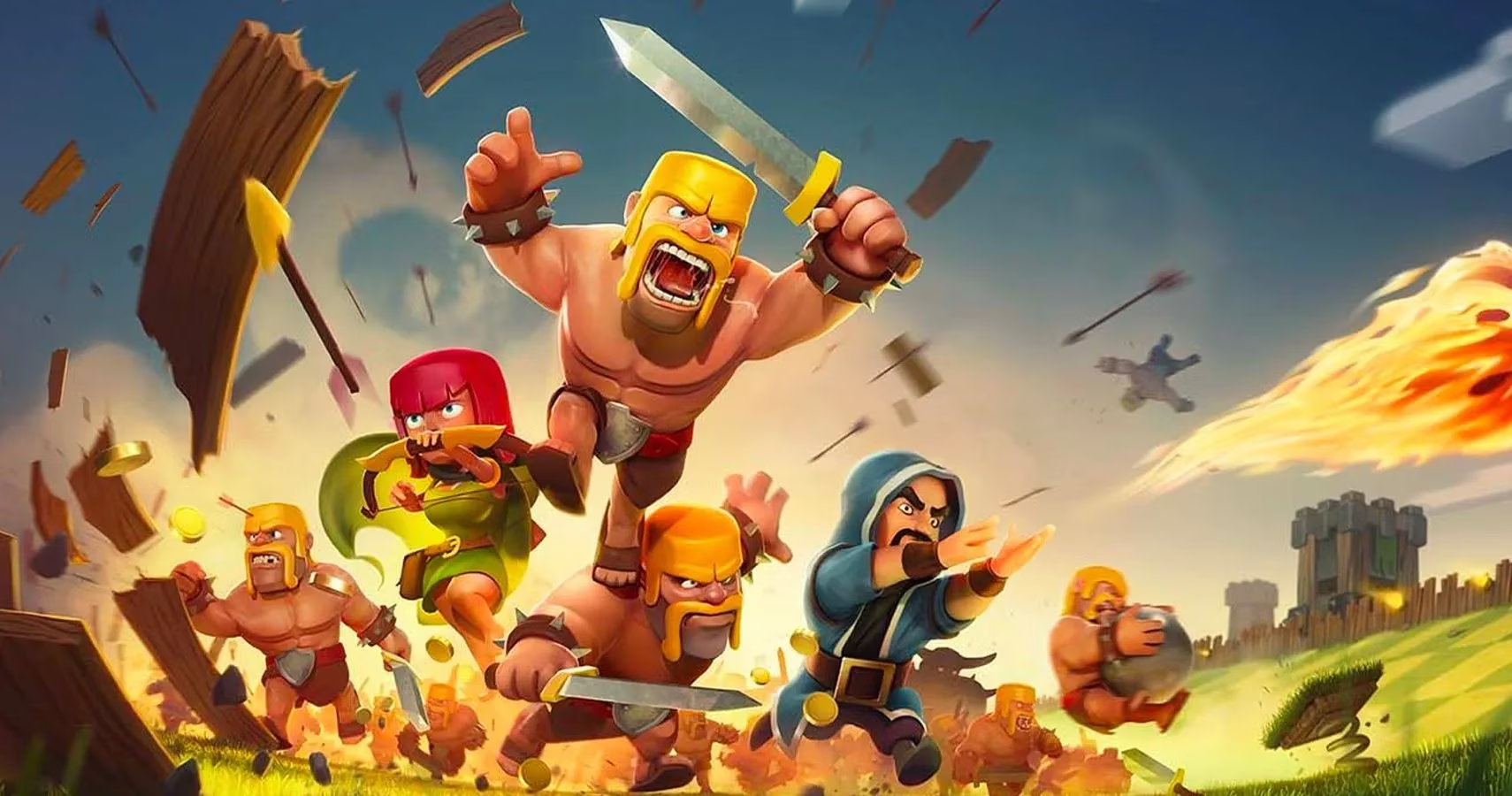
Let's talk numbers, because this game's financial performance is nothing short of legendary. According to industry trackers, over the last ten-year period, Clash of Clans generated more revenue than any other mobile title, period. It sat atop a mountain of gold coins while others scrambled below. The competition? A who's who of mobile giants, but all playing for second place:
-
🥇 Champion: Clash of Clans (Obviously)
-
🥈 Runner-Up: Monster Strike
-
🥉 Third Place: Candy Crush Saga
-
4th: Puzzle & Dragons
-
5th: Fate/Grand Order
And it wasn't just about making money; it was about building an empire of players. The game also secured the #5 spot on the list of the most downloaded games of the decade, proving its appeal was both wide and deep. That's the double-whammy—massive popularity and unmatched profitability. Talk about having your cake and eating it too!
So, what's the secret sauce? How did this game become the king of the hill? Well, it's a masterclass in "simple yet devastatingly effective" design. The core loop is a siren's call to the inner strategist in all of us: build your fortress, raid others for loot, defend your hard-earned resources, and repeat. But here's the kicker—the game is a master of patience and temptation.
On the surface, it's completely free-to-play. You can log in, build your huts, train your barbarians, and clash away without spending a single cent. The game winks at you and says, "Take your time, friend." But then it shows you your neighbor's fortress, bristling with high-level wizards, inferno towers, and majestic dragons that took months to breed. The progress bar crawls. The upgrade timer ticks... for days. And that's when the magic (and the money) happens. The game whispers, "Psst... you don't have to wait. A few gems could make that dragon hatch right now." This elegant, almost diabolical, balance between rewarding time investment and offering a paid shortcut is the engine that drove its astronomical revenue. Players weren't just buying pixels; they were buying time, prestige, and power.
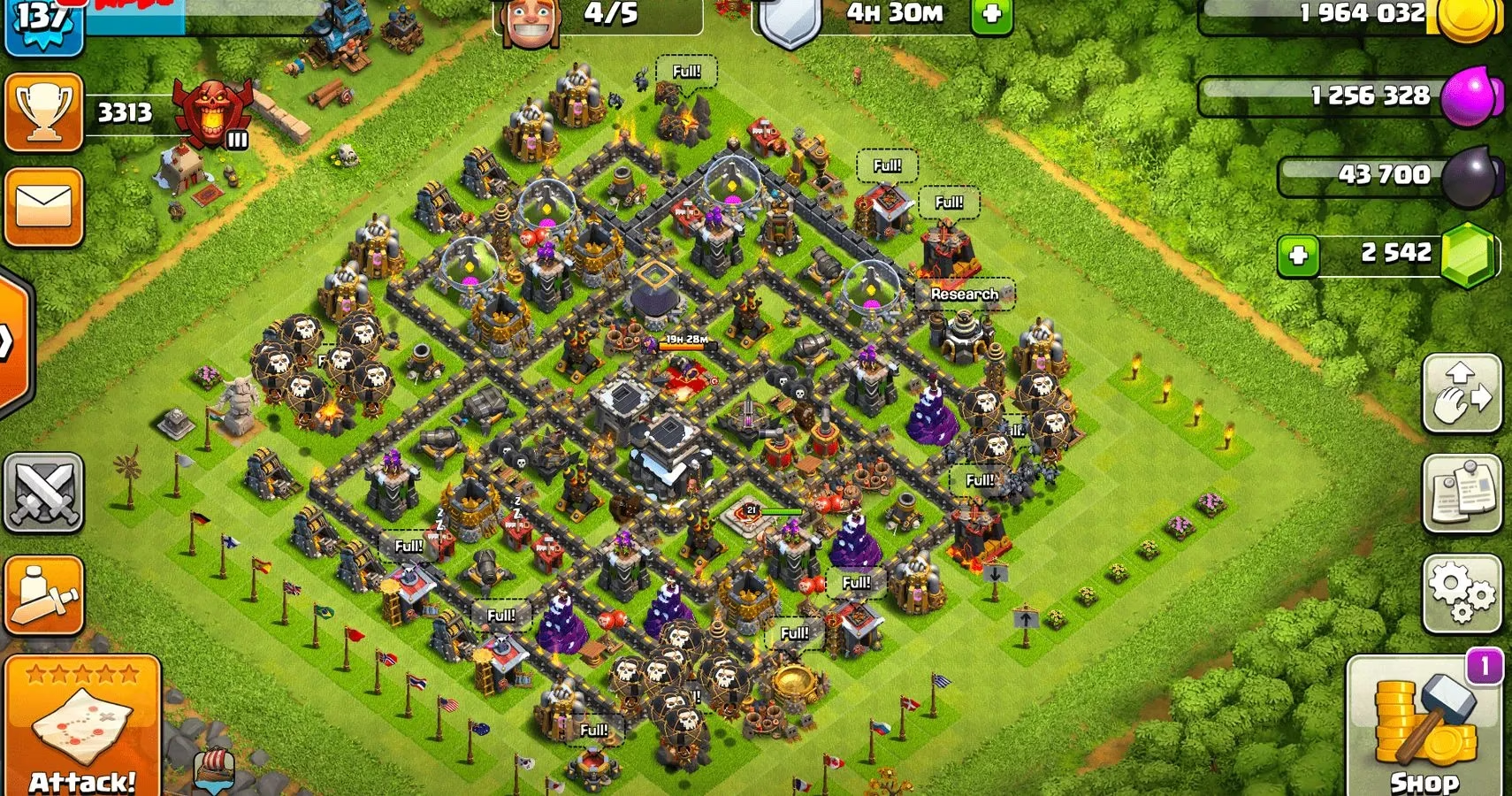
The game's units and defenses aren't just code; they're personalities! The lumbering Golem is the loyal tank, soaking up damage without a complaint. The sneaky Archer Queen moves with a lethal grace, picking off defenses from a distance. And the Baby Dragon? Don't let the name fool you—that little guy has a temper that can level a village. Building your base feels less like managing a spreadsheet and more like raising a chaotic, wonderful family that really, really likes to fight.
But Clash of Clans's legacy extends far beyond its own servers. It was a trendsetter, a pioneer in the wild west of mobile gaming. Back in 2012, the microtransaction landscape was still forming. Clash of Clans demonstrated, with overwhelming success, that players were willing to spend significantly within a free game to enhance their experience and accelerate progress. It basically wrote the playbook. One could argue, quite convincingly, that without the trail blazed by Clash, the mobile gaming ecosystem of 2026 would look profoundly different. Would games like Pokémon GO have embraced such aggressive monetization? Would the Mario Kart Tour model even exist? Its influence is the invisible architecture in countless titles today—love it or hate it, that's the reality.
Even now, in 2026, the game refuses to fade into nostalgia. Supercell has kept the engine running with consistent, massive updates that inject new life into the veteran title. Remember the introduction of the mighty Yeti troop? That was just one of many evolutionary steps. The game continues to adapt, adding new troops, spells, siege machines, and gameplay mechanics that keep its loyal legions engaged. It's a testament to a foundation so strong that it can support endless new floors.
In the end, Clash of Clans is more than a game. It's a phenomenon. It's the story of a Finnish studio that built a digital nation. It's the reason "clan" became a household word in gaming. It's the blueprint for mobile success and a case study in player psychology. It taught an industry how to monetize fun without (always) breaking the fun. So, whether you're a seasoned Chief with a maxed-out Town Hall or someone who just remembers the ads, tip your helmet to the king. The clash continues, and its echoes will be heard for decades to come. Now, if you'll excuse me, my Eagle Artillery upgrade just finished... and my gems are burning a hole in my pocket. 😉